


 TOMOHIRO IHATA
井畑 知大
Faculty of Medicine
Department of Neurosurgery

R&D stage

Point
-
We aim to develop an implantable surface light source device that enables repeated photodynamic therapy for refractory glioblastoma.
-
Following validation of the safety and efficacy of photodynamic therapy using this device in animal studies, we plan to advance toward clinical trials.
-
For clinical application of this device, industry–academia collaboration with engineers possessing world-leading technological expertise will be essential.
Keyword
Glioblastoma, Malignant glioma, Photodynamic therapy (PDT), 5-Aminolevulinic acid (ALA), Brain tumor
Background
Malignant gliomas, particularly glioblastoma, have a poor prognosis, with a median overall survival of approximately 18 months and a 5-year survival rate of less than 10% following current standard treatments (surgery, chemotherapy, and radiotherapy). The intractability of this disease is attributed to the inability to achieve complete surgical resection and the therapeutic resistance of glioma stem cells.
Photodynamic therapy (PDT) is expected to develop as a novel treatment modality that exerts direct cytotoxic effects via reactive radical species generated intracellularly through photodynamic reactions, using photosensitizers that preferentially accumulate in tumor cells.
5-Aminolevulinic acid (ALA), a naturally occurring porphyrin precursor, is endogenously present and is associated with minimal severe side effects.
PDT using talaporfin (TPF-PDT) for malignant glioma has already been approved for clinical use, and ALA-mediated PDT (ALA-PDT) is currently under clinical investigation in Europe. The high tumor selectivity of PDT allows for repeated treatments (metronomic PDT), which may provide greater antitumor effects compared with single-session treatment (Bisland SK et al., Photochem Photobiol., 2004; Yamamoto J et al., Clin Cancer Res., 2006).
Conventional PDT does not utilize ALA and requires high-intensity laser irradiation. This leads to photobleaching induced by high energy exposure, resulting in degradation of the photosensitizer and reduced treatment efficiency.
In contrast, ALA-mediated PDT enables prolonged irradiation at low light intensity. To realize this approach, an implantable light-emitting device placed on the brain surface is required.
Our laboratory is collaborating with a research group led by Shuji Nakamura at the University of California, Santa Barbara—recipient of the 2014 Nobel Prize in Physics—to develop an implantable intracranial light source device that enables repeated PDT for malignant glioma.
Overview and Progress
Key considerations in the development of this device include its implantation in the human body—particularly on the brain surface—requiring:
(1) lightweight construction,
(2) the ability to conform to uneven tissue surfaces,
(3) avoidance of excessive heat, as brain tissue exposed to temperatures above 42°C for more than 30 minutes can result in irreversible damage, and
(4) waterproofing, as biological environments, especially the brain, contain fluids such as cerebrospinal fluid.
To satisfy these requirements, we have developed a prototype implantable device for photodynamic therapy in small animal experiments. The device employs a thin, sheet-like flexible substrate to achieve lightweight properties and conformability ((1) and (2)). The temperature increase during operation is controlled to below 4°C, thereby preventing irreversible brain injury at a normal body temperature of 36°C ((3)). In addition, a thin parylene coating is applied to provide waterproofing ((4)).
Wireless power supply using alternating electromagnetic fields is adopted for this device. Although precise safety thresholds for electromagnetic fields in brain tissue have not yet been fully established, we employ field strengths within ranges that have been reported in prior studies to minimize biological impact. Compared with wired systems, wireless power delivery eliminates the need for surgical battery replacement and prevents displacement of the light source caused by traction on cables, thereby ensuring uniform irradiation coverage and consistent cumulative light dose.
For fixation of the device in small animal models, a nanosheet—developed by a research group led by Toshinobu Fujie at Tokyo University of Science—is utilized. This nanosheet is thin, colorless, and transparent, allowing efficient light transmission without attenuation, and is therefore well suited as an adhesive material for in vivo experiments.
Preclinical studies using a brain tumor small-animal model are currently underway to evaluate the efficacy and safety of this device. A domestic patent application has been filed in Japan, and an international patent application is planned in the future.
-
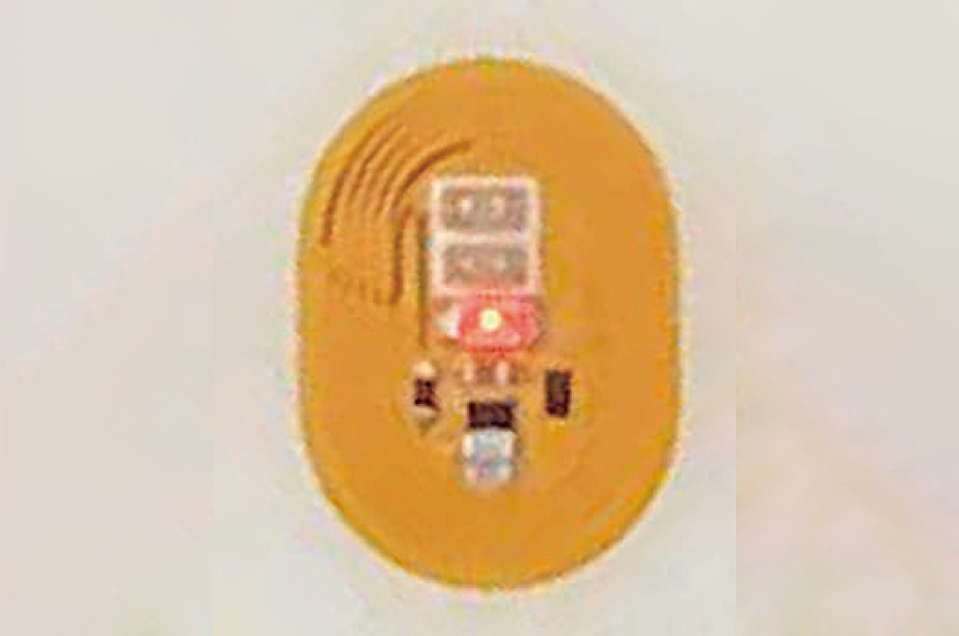
Size:0.92x11x8mm -
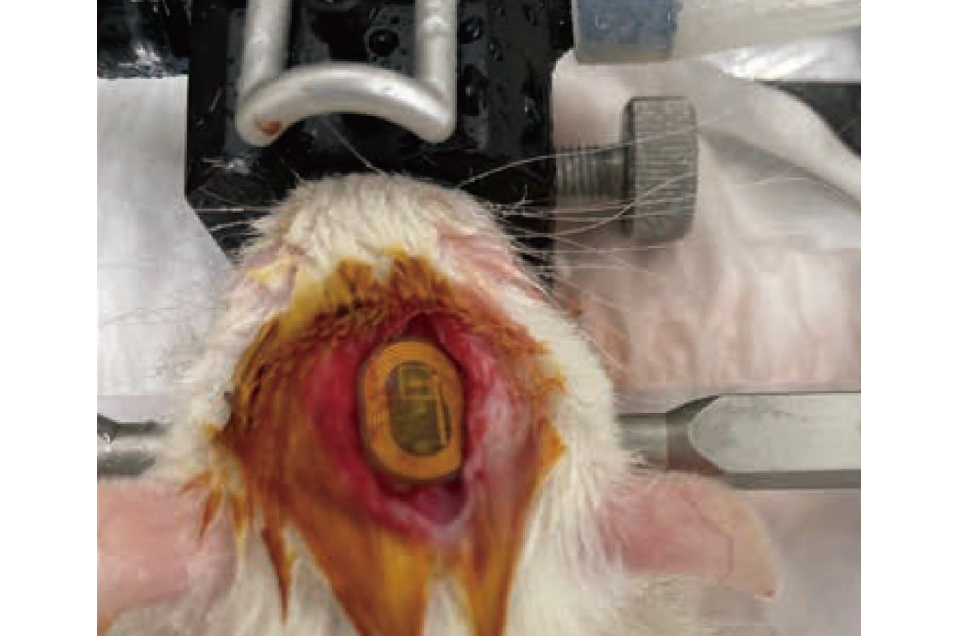
Implantation of an LED light source on the surface of the rat skull (subcutaneously) -
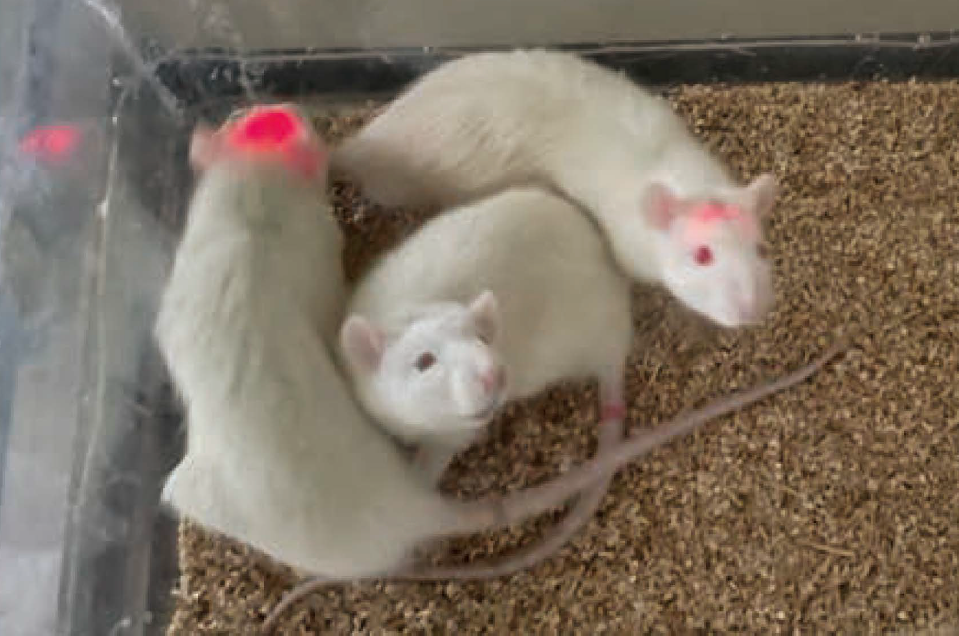
Market potential
The annual incidence of malignant gliomas, particularly glioblastoma, is estimated at approximately 6,000 cases in Japan and around 250,000 cases worldwide. These tumors are highly resistant to current standard therapies, including surgery, chemotherapy, and radiotherapy, and there is a strong unmet need for novel treatment strategies.
In conventional photodynamic therapy, such as talaporfin-mediated PDT (TPF-PDT), photosensitivity is a notable adverse effect. In contrast, ALA-mediated PDT (ALA-PDT) does not induce severe side effects such as photosensitivity.
If the implantable intracranial light-irradiation device developed by our group demonstrates both efficacy and safety, it has the potential for widespread global adoption. The application of this device is not limited to malignant brain tumors. Owing to its sheet-like structure, similar to paper, the device can conform closely to uneven tissue surfaces, enabling its application to cancers in other organs, such as esophageal, lung, colorectal, and prostate cancers.
Furthermore, this device is applicable not only to photodynamic therapy but also to photoimmunotherapy. Given its broad applicability and the large number of potential patients, this technology has the potential to become a high-value medical device in the global market.
Proposed Form of Social Implementation
This device is designed to be semi-permanently implanted within the resection cavity during craniotomy for brain tumor removal, enabling repeated photodynamic therapy (PDT) sessions during outpatient visits. We aim to obtain insurance coverage for this device as a platform for repeated PDT.
The target indications for insurance coverage are not limited to malignant brain tumors but are also intended to include cancers in other organs. By modifying the embedded LED chips, the device can emit light at different wavelengths, making it applicable not only to PDT but also to photoimmunotherapy, which likewise utilizes light irradiation. Therefore, it has the potential to be covered by insurance for multiple therapeutic modalities.
ALA is already approved as an oral agent for photodynamic diagnosis during surgery. In the future, we aim to establish a treatment approach in which patients take oral ALA, followed by activation of this device for a defined period to perform PDT. Ultimately, our goal is to enable patients to receive treatment at home.
Message to Potential Partners
We are developing this device in collaboration with the research group led by Shuji Nakamura at the University of California, Santa Barbara. In addition, our research is supported by multiple universities and companies with expertise in wireless power transmission, parylene coating, and nanosheet technologies.
However, several technical challenges remain in the development of this device, and industry–academia–government collaboration is essential to address them:
(1) This device is a novel implantable medical device designed to be compatible with MRI. We are seeking collaboration with researchers and companies capable of precision processing of non-magnetic materials such as titanium and stainless steel.
(2) As the device needs to be securely attached within the human body, we are seeking collaborators who can develop and refine thin, transparent, and colorless adhesive sheets or adhesives with high biocompatibility for human tissues.
(3) To ensure delivery of a consistent cumulative light dose to the treatment area, we are seeking collaboration with researchers and companies capable of simulating LED chip arrays and light irradiation from LED sources.
Related Publications and Intellectual Property
- Metronomic photodynamic therapy using an implantable LED device and orally administered 5-aminolevulinic. Kirino, et al. Scientific reports 10, 22017, 2020
- Tissue-adhesive wirelessly powered optoelectronic device for metronomic photodynamic cancer therapy. Yamagishi, et al. Nat Bio med Emg. Jan 3 (1) 27-36, 2019
- Metronomic photodynamic therapy with 5-aminolevulinic acid induces apoptosis and autophagy in human SW837 colorectal cancer cells. Shi et al.」Photochem Photobiol B. Sep 198 111586, 2019
[Patent] Pending