

| Name | Thomas George | |||
|---|---|---|---|---|
| Home University | Griffith University | |||
| Faculty/School | Medicine | |||
| Program Dates | From | March 23, 2026 | To | April 3, 2026 |
Introduction
My name is Thomas, and I am a final-year medical student from Australia. I had the opportunity to complete a two-week elective in the Cardiology department at Osaka Medical and Pharmaceutical University (OMPU), a highly regarded university known for its advanced clinical practice and strong academic reputation. Despite the relatively short duration, it was an incredibly rewarding experience that I will remember for a long time.
A Welcoming and Supportive Environment
From the very beginning, what stood out to me most was the kindness of everyone I encountered. Despite not being able to speak Japanese, I never felt out of place. The medical students were incredibly welcoming and always willing to help translate or explain what was happening. The doctors were equally supportive, often going out of their way to teach, even taking the time to give one-on-one explanations and informal teaching sessions. What surprised me the most was that this kindness extended beyond the clinical environment. Every single person I interacted with, including administrative staff and cafeteria workers, were consistently warm, patient, and helpful. It created an environment where I felt comfortable, supported, and genuinely looked after.
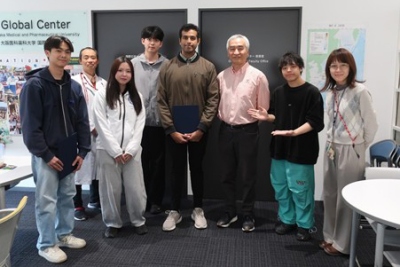
I also want to acknowledge the Global Centre staff, who clearly put a lot of thought and effort into organising the placement. Everything ran smoothly, and it was obvious that they were committed to making sure international students had the best possible experience. On a more personal note, they were always there when I had trouble navigating the seemingly endless white corridors of the hospital or when there were last-minute changes to my schedule. They were consistently checking in and looking out for me, which made a big difference, especially being in a new environment. Their support really allowed me to make the most of my time at OMPU.
Clinical Exposure and Learning in Cardiology
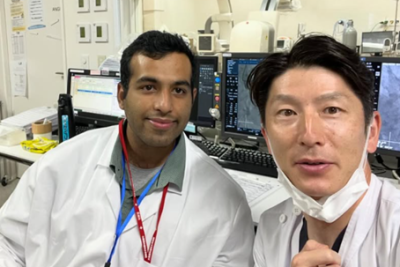
During my time in the Cardiology department, I had the chance to observe a wide range of advanced procedures, including transcatheter aortic valve implantation (TAVI), MitraClip procedures, echocardiography (including stress echo), endovascular therapy, catheter ablation, pacemaker implantation, and percutaneous coronary interventions. Being able to see such a variety of procedures in a relatively short time, particularly in a centre with access to advanced technology and high procedural volume, was a highlight of the elective.
What made these experiences particularly valuable was not just the procedures themselves, but how much effort the doctors put into teaching. They would often pause to explain what they were doing, go through the anatomy, and talk through the reasoning behind their decisions. This made a big difference to my learning, as it allowed me to move beyond just watching and actually understand what was happening. It was clear that there was a strong culture of education within the department.
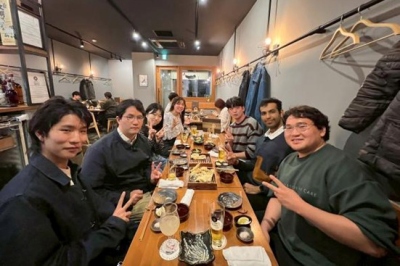
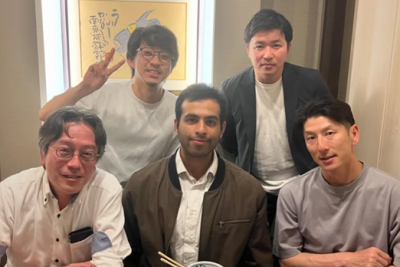
I would also like to thank Dr Shishikura, who made this clerkship possible. Without his support, I would not have had the opportunity to take part in this experience. He was incredibly generous with his time and teaching, consistently going out of his way to explain procedures and answer my questions. He also made a genuine effort to ensure I was making the most of my time at OMPU, regularly asking what I was interested in observing and guiding me on where to go next. I would also like to thank the cardiology team, who were welcoming and inclusive throughout my time there, even inviting me to join them for dinner after what had been a long and tiring day.
Reflections on Patient Care and Professionalism
One of the main things I took away from this elective was the importance of taking the time and effort to provide thoughtful, patient-centred care. Although I was not directly involved in ward-based care, it was clear from discussions and teaching sessions that there was a strong emphasis on understanding each patient in detail and approaching care in a careful and considered way. Compared to some of the faster-paced environments I have experienced in Australia, this felt like a more deliberate approach.
This experience made me reflect on how I approach patient care. It reinforced the idea that while efficiency is important, there is also real value in slowing down when needed, taking the time to explain things clearly, and making sure patients feel heard and understood. It is something that I hope to carry forward into my own practice.
The level of respect shown within the hospital was another aspect that stood out to me. Interactions between staff, students, and patients were consistently polite and considerate, which contributed to a very positive and supportive environment. As an international student, I felt that I was treated with the same level of respect, despite the language barrier and my limited ability to contribute clinically. This had a big impact on my experience and made me reflect on how important it is to create inclusive environments in healthcare.
Cultural Exchange and Personal Connections
Another important lesson for me came from the conversations I had with doctors and medical students during my time there. Having previously lived in other countries, this elective was a reminder of how much we all have in common. We spoke about our aspirations, hobbies, and also the stresses and pressures that come with studying and practising medicine. Despite being in a completely different country and healthcare system, many of these experiences were shared.
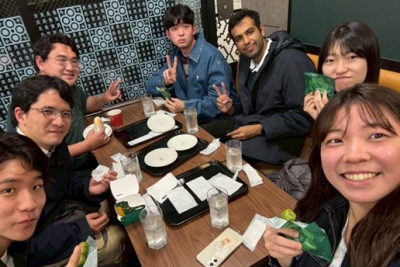
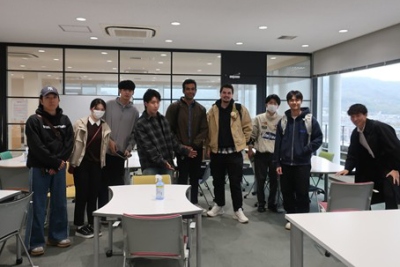
Beyond the hospital, my interactions with the students were some of the most meaningful parts of the experience. I am sincerely grateful to the members of the International Exchange Club for their warm hospitality. They organised welcome and farewell gatherings, invited us to dinner, and included us in social activities such as attending a professional basketball game. These moments outside of the clinical environment allowed for more open and genuine conversations. We were able to exchange our experiences in medical school and hospital systems, as well as talk about our aspirations and struggles. These interactions fostered a sense of connection and mutual understanding that I will carry with me.
I also hope that I will have the opportunity to return that same hospitality in the future and welcome them if they ever decide to come to Australia.
Conclusion and Personal Reflection
On a personal level, I also really enjoyed experiencing daily life in Japan, even over a short period. Outside of the hospital, I had the chance to explore, try new foods (which was definitely a highlight), and gain a better appreciation for Japanese culture. While this might seem like a small part of the elective, it added a lot to the overall experience and made it more memorable.
Looking back, one of the most important reflections I have taken from this experience is how easy it is to become fully absorbed in the clinical and academic aspects of medicine. As students, we often focus heavily on acquiring knowledge, refining our clinical skills, and striving to meet expectations. In doing so, it can be easy to overlook the humanistic side of medicine. The way we interact with patients, the respect we show to colleagues, and the small acts of kindness that shape the clinical environment.
Experiencing the kindness, generosity, and hospitality of everyone I encountered during my time at OMPU, especially as an outsider, has left a lasting impression on me. It served as a reminder that these qualities are not secondary to clinical competence but are fundamental to becoming a good doctor. The primary reason I was drawn to medicine was the desire to alleviate suffering in whatever way I could. This experience has brought me one step closer to that goal, not just by improving my clinical understanding, but by reinforcing the values that underpin compassionate care.
Although it was only a two-week placement, it was a deeply meaningful experience. I am very grateful to everyone at OMPU for their kindness, generosity, and willingness to teach. It is something I will carry with me throughout my medical career.