

| Name | Yu-Hsiang Lai | |||
|---|---|---|---|---|
| Home University | National Taiwan University | |||
| Faculty/School | Medicine | |||
| Program Dates | From | January 5, 2026 | To | January 30, 2026 |
Introduction
Shortly after the New Year, I departed for Japan with a mixture of anticipation and uncertainty. Although I had previously traveled during winter, the dry and penetrating cold still caught me by surprise.
Each visit to Japan has been accompanied by a deep respect for its preserved culture and disciplined social structure. As neighboring societies that share certain historical and cultural parallels, Japan’s healthcare system—known for its structural completeness and technological advancement—has long drawn my interest. For this elective, I deliberately chose primarily outpatient-based specialties in order to observe how the healthcare system functions at the level most closely connected to the general population.
Week 1 – Ophthalmology
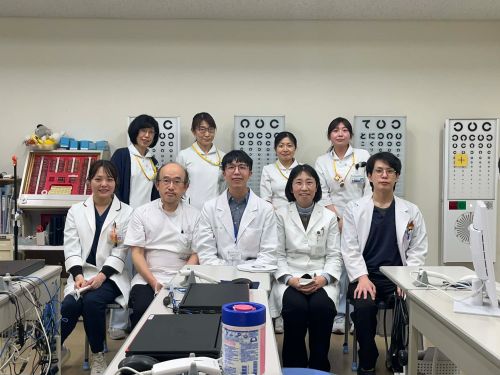
My first week was spent in the Department of Ophthalmology, where the schedule consisted mainly of outpatient clinics and surgical observation. The outpatient services were highly subspecialized, with dedicated clinics for glaucoma, cataracts, retinal diseases, and other conditions. This structured division of labor allowed physicians to concentrate deeply on their respective fields while maintaining high clinical efficiency.
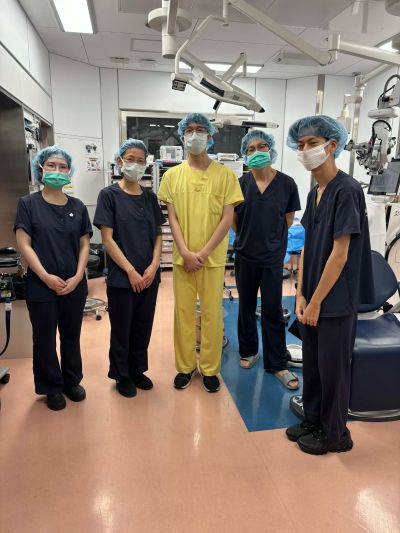
I had the opportunity to observe and perform several diagnostic procedures, including optical coherence tomography (OCT) and fundus photography. What impressed me most was not only the sophistication of the equipment, but also the physicians’ ability to rapidly integrate imaging findings with clinical evaluation and clearly communicate management plans to patients. Diagnostic tools were not used in isolation; they were seamlessly incorporated into clinical reasoning.
Cataract and glaucoma surgeries were the primary procedures observed. Cataract surgery, in particular, demonstrated a remarkable level of standardization. From preoperative assessment to postoperative counseling, each step followed a clear protocol supported by a well-coordinated team.
Reflection
This week highlighted the importance of systematization and subspecialization. Well-designed workflows and clearly defined roles contribute to consistent and safe patient care. I was reminded that high-quality medicine depends not only on individual skill, but also on structured teamwork and institutional maturity.
Week 2 – Department of Radiology
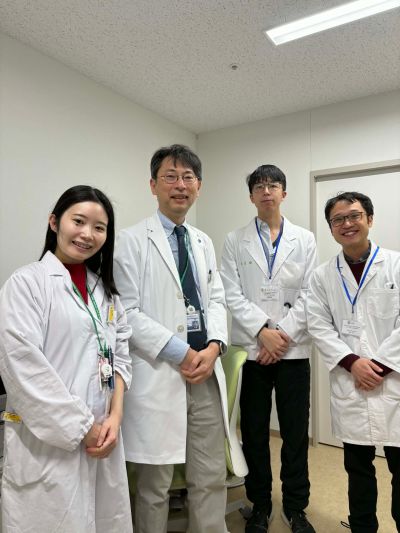
During the second week, I joined the Department of Radiology, which encompassed both diagnostic imaging and therapeutic interventions. Imaging reports were concise yet comprehensive, with carefully structured differential diagnoses and precise terminology. Although radiologists may not interact extensively with patients, their interpretations frequently guide critical clinical decisions.
One of the most memorable experiences was learning about Boron Neutron Capture Therapy (BNCT). This treatment involves the selective accumulation of boron-containing compounds within tumor cells, followed by neutron irradiation. The interaction triggers a nuclear reaction that releases high-energy particles, selectively destroying tumor cells while minimizing damage to surrounding healthy tissue. BNCT represents a sophisticated integration of nuclear physics and oncology, reflecting the potential of interdisciplinary innovation in modern medicine.
Reflection
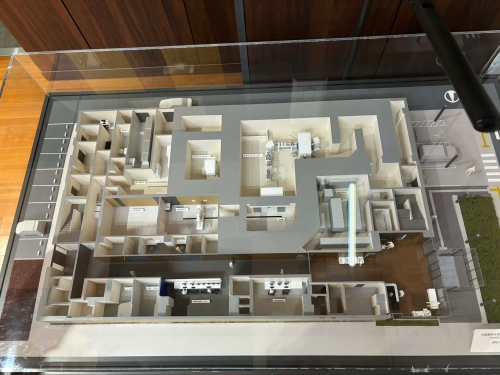
Radiology reinforced my appreciation for so-called “supporting specialties,” whose contributions are foundational to clinical practice. BNCT further demonstrated how advances in basic science can redefine therapeutic possibilities. As medical technology evolves, physicians must develop the capacity to understand and appropriately integrate such innovations into patient care.
Week 3 – Dermatology
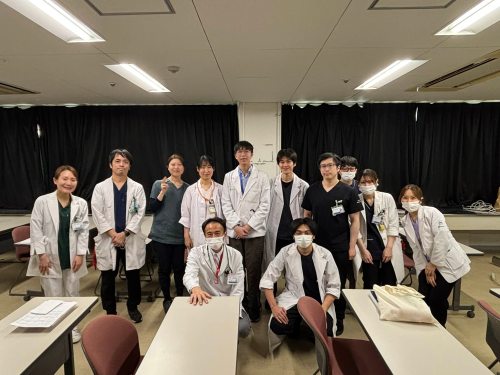
The third week was spent in the Department of Dermatology, primarily in outpatient clinics. The pace was brisk, yet diagnostic accuracy relied heavily on detailed observation and clinical experience. Many conditions—ranging from eczema and acne to autoimmune skin diseases and cutaneous malignancies—required careful visual assessment and focused history-taking.
I also observed allergy testing, including patch testing. Physicians interpreted results in close conjunction with patients’ daily habits and environmental exposures, providing practical and individualized recommendations. This integration of medical knowledge with lifestyle guidance demonstrated how outpatient medicine can directly improve patients’ quality of life.
Reflection
Dermatology emphasized the value of longitudinal care and sustained physician–patient relationships. While less dramatic than acute care settings, outpatient medicine plays a crucial role in maintaining well-being and functional health. This experience deepened my respect for specialties centered on continuity and quality-of-life improvement.
Week 4 – Multidisciplinary Exposure
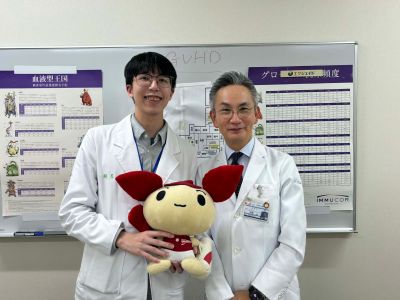
During the fourth week, I rotated through several departments, including Anesthesiology, Otolaryngology, Forensic Medicine, and the Blood Transfusion Department.
In Anesthesiology, I observed operating room management and attended pain clinics. Anesthesiologists maintain physiological stability throughout surgical procedures, requiring constant vigilance and precise judgment. The pain clinic offered a contrasting perspective, focusing on chronic pain management where the goal is often functional improvement rather than complete symptom elimination.
Otolaryngology similarly combined outpatient care with surgical practice, utilizing advanced endoscopic techniques and efficient clinical workflows.
An unexpected yet invaluable experience was participating in a forensic autopsy. Through this process, I gained a clearer understanding of cause-of-death determination and its legal and societal implications. Medicine extends beyond the preservation of life; it also bears responsibility in clarifying death.
At the Blood Transfusion Department, I learned about Japan’s nationwide blood donation and supply system. From collection and screening to processing, storage, and distribution, each stage followed rigorous quality control standards. The reliability of clinical blood supply reflects not only technical expertise but also public trust and societal engagement.
Reflection
This final week allowed me to appreciate the healthcare system in its entirety. From operating rooms to blood banks, from outpatient clinics to forensic facilities, each component plays an essential role. Medicine is not an isolated act of treatment, but a coordinated system sustained by institutional structure and professional accountability.
Conclusion
This clinical elective in Japan was not merely an opportunity to observe medical techniques, but a comprehensive learning experience in healthcare systems and professional culture. The Japanese medical environment demonstrated meticulous attention to detail, structured workflows, and a strong sense of responsibility.
I came to understand that the quality of healthcare is grounded not only in individual competence, but in institutional organization, teamwork, and societal support. Regardless of the specialty I ultimately pursue, I hope to internalize these principles—continual professional development, respect for systematic practice, and awareness of medicine’s broader social role—as guiding values in my future career.