


| Name | Wu Hung Yi | |||
|---|---|---|---|---|
| Home University | National Taiwan University | |||
| Faculty/School | Medical School | |||
| Program Dates | From | January 5, 2026 | To | January 28, 2026 |
1. Introduction
I participated in a four-week clinical elective at Osaka Medical and Pharmaceutical University (OMPU), during which I rotated in two surgical departments: two weeks in Plastic Surgery and two weeks in General Surgery.
I am sincerely grateful for this thoughtfully designed program. Instead of frequently switching between departments, the four-week arrangement allowed me to spend a meaningful amount of time within each specialty. This arrangement enabled deeper observation, better understanding of clinical workflows, and more substantial interaction with faculty members and residents.
As a sixth-year medical student from National Taiwan University with a strong interest in pursuing a surgical career, this extended exposure provided me with valuable insight into Japanese surgical practice, education, and professional culture. The experience not only broadened my clinical perspective but also strengthened my commitment to developing surgical precision and patient-centered care in my future career.
2. Department of Plastic Surgery
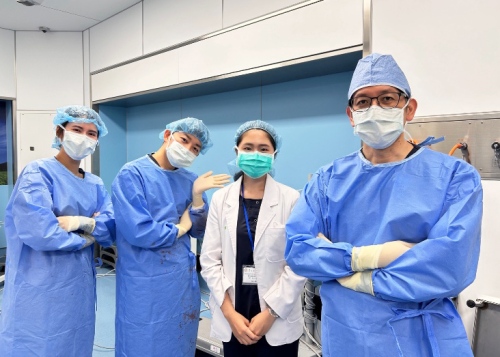
During my two-week rotation in the Department of Plastic Surgery, I was deeply impressed by the refinement and delicacy of surgical technique. The surgeons demonstrated exceptional attention to tissue handling, wound closure, and aesthetic considerations. Every incision and suture reflected thoughtful planning and remarkable precision.
What stood out to me most was the department’s pursuit of perfection. Even minor details were approached with great care, reflecting a strong commitment to achieving both functional and aesthetic excellence.
When I observed outpatient clinics, I was particularly impressed by the patience and thoroughness with which surgeons communicated with their patients. They were willing to dedicate significant time to explaining surgical options, potential outcomes, and postoperative expectations. Each consultation felt comprehensive and patient-centered.
One notable difference compared to my experience in Taiwan was the outpatient workload. At OMPU, each clinic session typically scheduled approximately ten patients, allowing sufficient time for in-depth discussion. In contrast, at National Taiwan University Hospital, a single clinic session may include nearly fifty patients. Due to the high patient volume in Taiwan, surgeons often have limited time for extended conversations, despite their dedication and professionalism. Observing the comparatively smaller patient load at OMPU allowed me to reflect on how healthcare systems and resource distribution influence doctor–patient communication.
The atmosphere in both the operating room and clinic was calm and focused. The surgeons also took time to explain reconstructive principles, flap design considerations, and wound management strategies. Through these discussions, I gained a deeper understanding of how surgical technique, aesthetic judgment, and patient communication are closely integrated in plastic surgery.
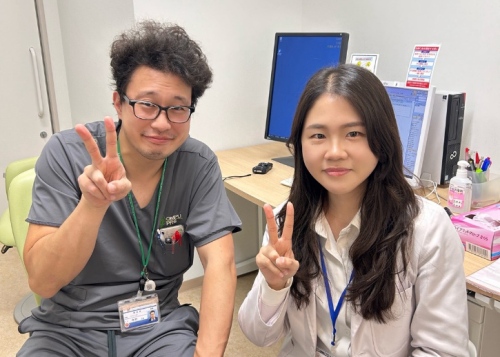
I would like to express my sincere gratitude to Professor Nuri, Dr. Asaka, and Dr. Imamura for their generous guidance and support. I am especially thankful that they allowed me to observe surgeries closely and participate in outpatient clinics. Their willingness to teach and include me in daily clinical practice made this rotation both meaningful and inspiring.
This experience greatly enhanced my appreciation for surgical craftsmanship and reinforced the importance of meticulous technique and effective communication in achieving optimal outcomes.
3. Department of General Surgery
During my two-week rotation in the Department of General Surgery, I gained valuable insight into both surgical practice and the structural organization of the healthcare system in Japan. This rotation allowed me not only to observe operative techniques but also to reflect on differences between Japanese and Taiwanese surgical systems.
One of the first differences I noticed was the way surgical specialties are organized. In Taiwan, departments are often divided by anatomical region—for example, esophageal cancer is typically managed by chest surgery. In contrast, at OMPU, specialties are structured more according to organ systems, and esophageal cancer is managed within general surgery. This organizational difference reflects distinct training models and clinical pathways. Observing this broadened my perspective on how surgical departments can be structured effectively in different healthcare systems.
I was also impressed by the high proportion of minimally invasive procedures in gastrointestinal surgery. Robotic and laparoscopic approaches were widely utilized, demonstrating a strong integration of advanced technology into routine practice. One particularly memorable case was a laparoscopic total mastectomy, which I found both technically innovative and intellectually stimulating. Witnessing such procedures expanded my understanding of how surgical techniques continue to evolve.
I am sincerely grateful that the department adjusted their morning case conference to English for my benefit. This thoughtful accommodation allowed me to actively participate in discussions and better appreciate their clinical reasoning. In the operating room, the surgical team was exceptionally supportive. They carefully explained each procedural step and ensured that I could follow the operative flow. I was especially thankful for the opportunity to participate in wound closure under supervision, which was both encouraging and educational.
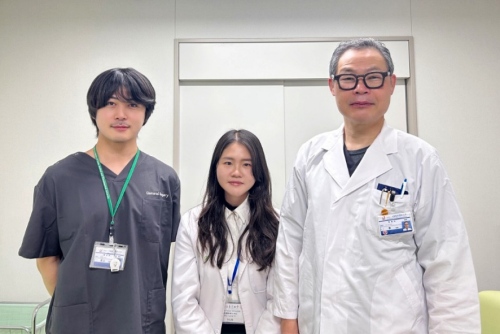
I would also like to express my deepest appreciation to Professor Lee for allowing me to join his outpatient clinic together with the fourth-year medical students. In clinic, I observed a patient-centered communication style characterized by patience and thorough explanation. Surgeons dedicated substantial time to discussing treatment options, risks, and expected outcomes, ensuring that patients fully understood their choices. I was particularly impressed by how surgeons personally drew detailed operative diagrams during consultations, often adding color to clearly illustrate anatomical structures and surgical plans. These carefully crafted illustrations not only reflected aesthetic precision but also demonstrated a deep commitment to patient education.
During my time in the department, I became aware of another notable difference in inpatient care. In Taiwan, family members commonly remain in the hospital to assist with bedside care, and wards often provide foldable beds for caregivers. In contrast, I did not observe bedside family caregivers in the Japanese wards. However, my clinical schedule during this elective was primarily focused on operating room observation and outpatient clinics, and there was no dedicated ward-based course included in my rotation. Therefore, I did not have the opportunity to closely examine the detailed structure of inpatient ward management in Japan.
Nevertheless, this contrast prompted me to reflect on how healthcare systems adapt to different social structures and resource distributions. Surgical practice is shaped not only by technical skill but also by institutional organization, cultural expectations, and the broader healthcare environment. This rotation encouraged me to think beyond the operating field and consider the systemic context in which surgical care is delivered.
4. Interaction with Students and International Exchange
Beyond clinical training, my interactions with students at OMPU were among the most meaningful aspects of this exchange. I am sincerely grateful to the members of the International Exchange Club for their warm hospitality. They kindly organized a welcome gathering and a farewell event, and generously invited us to share meals together throughout our stay. On the evening before my departure, we went to an izakaya together, where we had open and heartfelt conversations about our future career aspirations, differences between our healthcare systems, and cultural distinctions between our countries. These exchanges fostered mutual understanding and strengthened both academic and personal connections. Before leaving Japan, I sincerely invited them to consider National Taiwan University for their own overseas elective during their sixth year, and I hope that our institutions may continue to cultivate this spirit of international collaboration.
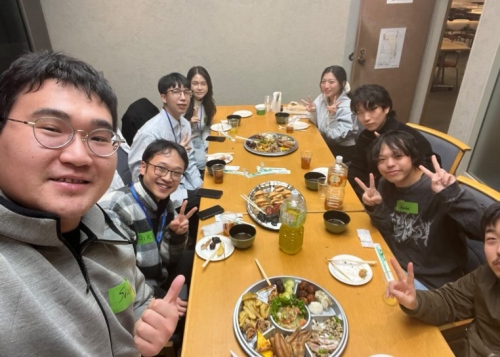
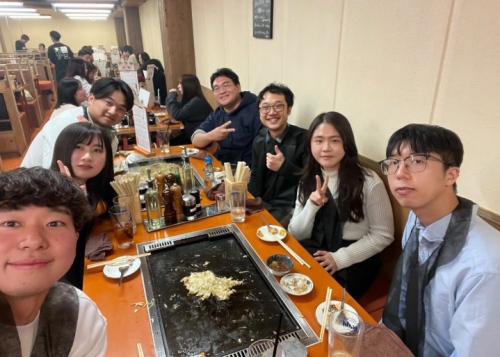
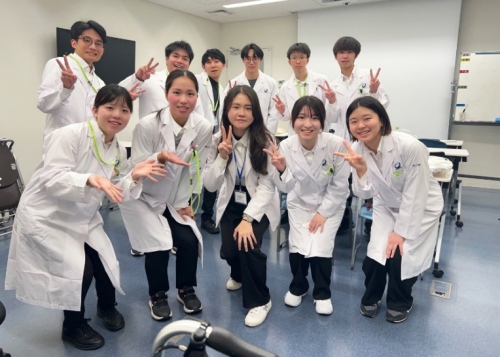
I am also deeply thankful to the fourth-year medical students I met during my rotation in General Surgery. During my first two weeks in Plastic Surgery, I did not encounter any medical students in the department, and my fellow exchange students were assigned to other specialties. As a result, I often had lunch alone, and although I remained focused on learning, there were moments when I felt somewhat isolated in an unfamiliar environment. When I joined General Surgery, however, the fourth-year students warmly welcomed me into their daily routine. They invited me to have lunch with them every day, and sometimes dinner as well. They also encouraged me to attend classes with them, including both academic lectures and a suturing workshop, which was both educational and enjoyable. Studying together in the operating room, attending classes, and sharing daily conversations created a strong sense of companionship that greatly enriched my exchange experience. I would like to extend my special thanks to Kaho and Mami. Our conversations were always engaging and sincere, and I am truly grateful to have met such thoughtful and supportive friends during my time in Japan. I wish them continued success in their studies and hope they will enter the specialties they aspire to pursue, becoming excellent doctors in the future.
5. Personal Reflection
IThis four-week elective at Osaka Medical and Pharmaceutical University was an invaluable experience that significantly shaped both my professional development and personal growth. The thoughtfully structured program—allowing two weeks in Plastic Surgery and two weeks in General Surgery—provided continuity and depth, enabling me to immerse myself fully in each department rather than rotating superficially through multiple specialties.
Through observing refined surgical techniques, advanced minimally invasive procedures, and patient-centered communication styles, I gained a broader perspective on how surgical excellence is cultivated. I was particularly inspired by the pursuit of precision, the emphasis on detailed operative planning, and the respect shown toward patients through thorough explanation and shared decision-making. At the same time, comparing structural differences between Taiwan and Japan—whether in departmental organization or inpatient care systems—encouraged me to think critically about how healthcare environments shape clinical practice.
Equally meaningful were the friendships and academic exchanges formed during this rotation. Interacting with medical students and members of the International Exchange Club reminded me that medicine transcends national boundaries. The generosity, openness, and intellectual curiosity of everyone I met enriched my experience beyond clinical learning.
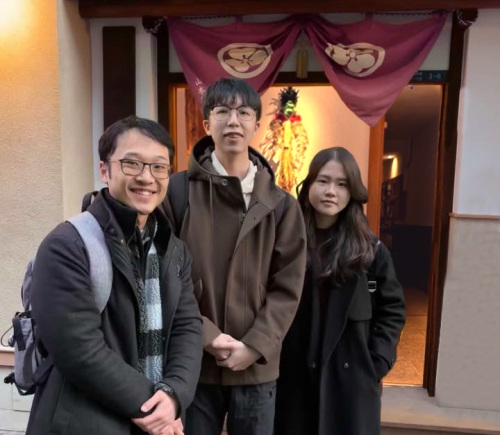
I would also like to express my sincere appreciation to OMPU for sponsoring our attendance at a traditional Noh theater performance. This opportunity allowed us to experience Japanese classical art in an authentic and memorable way.
Furthermore, I would like to extend my heartfelt gratitude to the staff of the Global Center, especially Ms. Makino and Dr. Kobayashi. From the initial communication during the application process to their continued support and concern throughout our stay in Japan, their assistance ensured that this exchange proceeded smoothly. Their professionalism and kindness made us feel welcomed and well cared for in a foreign environment.
As I continue my medical training with the goal of pursuing a career in surgery, this exchange has strengthened my determination to strive for technical excellence, thoughtful communication, and lifelong learning. I am profoundly grateful to the faculty members, residents, students, and staff at OMPU for their guidance, kindness, and support. The lessons and inspiration I gained during these four weeks will continue to influence my journey as a future surgeon.